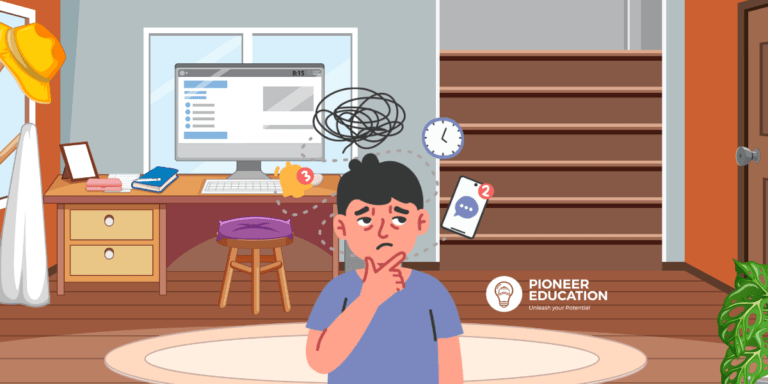
What Students Get Wrong Before Exams — And Why Last-Minute Studying Rarely Works
What are the most common mistakes students make before exams?
The most common mistakes include leaving revision too late, studying without structure, focusing only on easy topics, and relying on memorisation instead of understanding. With effective study habits and targeted tutoring support, students can prepare more confidently and perform better in exams.
I. Introduction
As exams approach, many students suddenly shift into “study mode.” Parents often see the same pattern every term — late-night revision, rising stress levels, and students trying to cram large amounts of information into a short period of time. Despite all the effort, results are often disappointing, leaving students feeling frustrated and overwhelmed.
At Pioneer Education, we see this cycle across all year levels, from primary school students sitting their first major assessments to senior students preparing for the HSC. The issue is rarely a lack of effort. More often, students are making common preparation mistakes that reduce the effectiveness of their study.
The good news is that these mistakes are highly fixable once students understand how to prepare properly. In this article, we’ll explore the most common exam mistakes students make from Years 3–12 and explain how structured support and tutoring help students approach exams with greater confidence and success.
II. Leaving Revision Until the Last Minute
One of the biggest mistakes students make is waiting too long to start revising. Many students underestimate how much content they need to review or assume they will “catch up later.” As exams get closer, panic sets in and revision becomes rushed and stressful.
Last-minute cramming may help students memorise information temporarily, but it rarely leads to deep understanding or long-term retention. Students often forget large portions of what they studied shortly after the exam.
More importantly, cramming increases stress significantly. Students feel overwhelmed because they are trying to learn, revise, and practise everything at once.
Consistent revision over time is far more effective than intense short-term studying.
III. Studying Without a Clear Plan
Another common issue is unstructured study. Many students sit down intending to revise but have no clear direction. They jump randomly between subjects, spend too much time on easier tasks, or focus only on what feels familiar.
Without a study plan, revision becomes inefficient and exhausting. Students may spend hours “studying” without making meaningful progress.
Effective exam preparation requires prioritisation. Students need to know:
- what topics are most important,
- which subjects need the most attention,
- and how to divide their time realistically.
Tutoring helps students create structure, which immediately reduces feelings of overwhelm.
IV. Avoiding Difficult Topics
Many students naturally gravitate toward subjects or topics they already feel comfortable with. This creates the illusion of productivity because revision feels easier and more rewarding.
However, avoiding weaker areas is one of the fastest ways to limit exam performance. The topics students struggle with most are usually the ones that need the greatest attention.
At Pioneer Education, we often see students repeatedly revising strengths while ignoring foundational gaps. This leads to frustration during exams when difficult questions appear and students realise they are unprepared.
Strong exam preparation requires students to confront weaknesses early rather than avoid them.
V. Memorising Instead of Understanding
Another major mistake is relying too heavily on memorisation. Some students attempt to memorise formulas, essay responses, or definitions without fully understanding the underlying concepts.
This becomes a problem when exams include unfamiliar questions that require application, reasoning, or deeper thinking. Students who rely only on memorisation often panic when questions are worded differently from what they practised.
True understanding allows students to adapt their knowledge flexibly during assessments. This is why tutoring focuses heavily on concept mastery rather than rote learning alone.
VI. Practising Too Little Under Exam Conditions
Many students revise notes repeatedly but spend very little time actually practising exam-style questions.
Reading notes may feel productive, but exams test application under pressure. Students need practice managing time, interpreting questions carefully, and completing tasks independently.
Without exposure to exam conditions, students often struggle with:
- timing,
- stress management,
- careless mistakes,
- and confidence during assessments.
Practising under realistic conditions helps students feel calmer and more prepared on exam day.
VII. Ignoring Sleep, Breaks, and Wellbeing
As exams approach, students sometimes sacrifice sleep and rest in an attempt to study more. Unfortunately, this often backfires.
Lack of sleep affects concentration, memory, problem-solving, and emotional regulation. Students may spend longer studying but retain less information overall.
Balanced routines are essential during exam periods. Students who maintain healthy sleep, regular breaks, and manageable study schedules often perform better because their brains are functioning more effectively.
Tutoring helps students study more efficiently so they do not feel the need to overwork themselves constantly.
VIII. How Tutoring Improves Exam Preparation
Tutoring provides students with the structure and guidance many struggle to create independently.
At Pioneer Education, we help students:
- identify weak areas early,
- create realistic revision schedules,
- strengthen foundational understanding,
- practise exam-style questions,
- and develop confidence under assessment conditions.
Tutoring also provides accountability. Students are more likely to stay consistent when they have regular support and clear study goals.
Most importantly, tutoring transforms exam preparation from reactive panic into proactive planning.
IX. Questions Parents Often Ask
- When should students start preparing for exams?
Ideally, revision should begin gradually several weeks before exams rather than being left until the final days. - Is cramming ever effective?
Cramming may help short-term memorisation, but it is far less effective than consistent revision over time. - Why does my child study for hours but still struggle in exams?
This is often due to inefficient study methods, lack of structure, or focusing on memorisation instead of understanding. - Can tutoring reduce exam stress?
Yes. Clear structure, targeted revision, and stronger understanding significantly reduce assessment anxiety.
X. Better Preparation Creates Better Confidence
Exam success is not just about intelligence — it’s about preparation habits. Many students struggle not because they are incapable, but because they have never been shown how to prepare effectively.
At Pioneer Education, we help students from Years 3–12 develop smarter study habits, stronger understanding, and greater confidence before assessments. With the right support, exams can feel manageable rather than overwhelming.
Book a trial class today and help your child prepare for exams with confidence, structure, and less stress.
XI. About the Author
Ann Tolentino, CHRA is the Executive Assistant – HR & Operations at Pioneer Education. With 3 years of experience, she manages HR and operational processes while supporting families and connecting with students, helping ensure the right staff and learning solutions are in place for every child to succeed.