The Real Reason Students Fall Behind Early — Large Class Sizes & Hidden Gaps
Why do students fall behind early in the school year?
Large class sizes often prevent teachers from identifying individual learning gaps, especially in the early weeks of Term 1. These gaps compound quickly, causing students to lose confidence and struggle silently. Personalised tutoring identifies and addresses these issues before they grow, ensuring students stay on track.
I. Introduction
Your child has just started a new school year — fresh uniform, sharpened pencils, new teachers. Everything seems fine… until the homework starts piling up, their confidence dips, and they quietly begin to fall behind. For many parents, it comes as a surprise. “How did things go wrong so quickly?” The truth is, it’s often not because of a lack of effort or ability — but because of something more subtle and systemic: class size and hidden learning gaps.
At Pioneer Education, we see this scenario unfold every Term 1. Bright students, capable of great results, begin to struggle not because they can’t learn — but because their specific needs go unnoticed in busy classrooms. In this blog, we’ll explain the real reason students fall behind early in the year, how large class sizes contribute to hidden learning gaps, and what you can do now to prevent long-term setbacks.
II. Why Class Size Matters More Than You Think
In a classroom of 25 to 30 students, even the best teachers are stretched. They have to cover a set curriculum, manage behaviour, and keep everyone moving forward — all within a limited time frame. It’s not that they don’t care; it’s that they simply don’t have the capacity to give every student the individual attention they need, especially in the first few weeks of school.
This lack of individual focus means that students who are slightly confused, quietly unsure, or falling just one step behind often go unnoticed. These students might nod along, copy from the board, or avoid raising their hand. But internally, they’re struggling. And because the class moves on, the gap widens.
By the time assessments arrive in Term 2, these early misunderstandings have become bigger problems — and the stress that follows affects both academic performance and emotional wellbeing.
III. Hidden Gaps Are Hard to Spot — Even for Teachers
Some learning gaps are obvious — like when a student can’t answer a basic maths problem or reads far below grade level. But most gaps are more subtle. A student may understand how to solve a problem but not why it works. They might write fluent sentences but struggle to construct a persuasive argument. These types of gaps are easy to miss in a large class.
Compounding the issue, students often won’t speak up. They don’t want to feel embarrassed in front of peers or admit they don’t understand something they “should” know. So they develop coping mechanisms — memorising patterns without comprehension or completing tasks with minimal effort. These habits might get them through early homework, but they don’t support real learning.
Without a teacher or tutor closely observing how they think and approach problems, these gaps stay hidden — until they result in lower marks or visible disengagement.
IV. Why Early Intervention Makes All the Difference
Term 1 is the best time to catch and correct learning gaps — because the curriculum is still in its early stages, and the pressure is lower. Addressing gaps now prevents a year-long struggle. But relying solely on school structures makes this difficult, especially when students are expected to “keep up” in a fast-paced classroom.
Tutoring offers a solution. At Pioneer Education, our first step is always diagnostic. We assess what your child really knows — not just what’s been taught — and identify areas that need reinforcement. From there, we build a personalised learning plan that strengthens weak areas while boosting confidence in subjects your child already enjoys.
Our small class sizes (maximum of 8 students) and 1-on-1 options allow tutors to observe closely, give instant feedback, and adapt lessons on the spot — something that’s rarely possible in large school classrooms. This one-to-one attention allows us to catch those hidden gaps and close them fast.
V. What Falling Behind Looks Like — And How to Respond
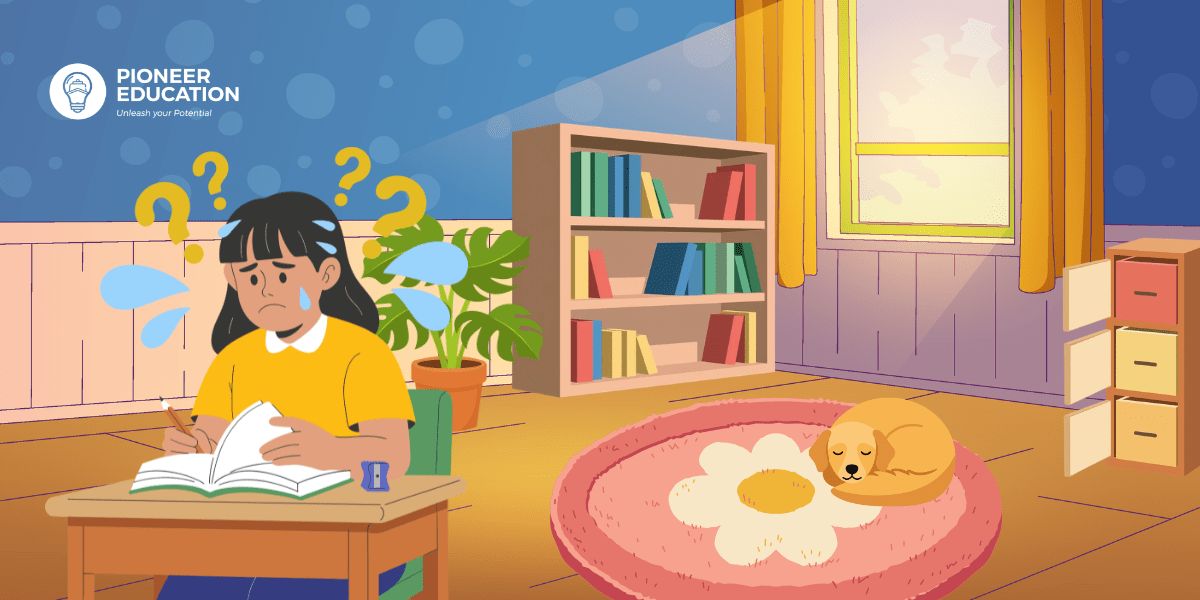
It’s not always obvious when a child is falling behind. Some signs are subtle: they might seem more tired after school, procrastinate on homework, or say things like “I’m just not good at this.” Others may develop anxiety around school or refuse to talk about what they’re learning.
The earlier these signs are addressed, the easier it is to help. Tutoring provides a safe, low-pressure environment where students can ask questions without judgement. It helps them rebuild belief in their abilities and gives them the tools they need to participate more fully in class.
Most importantly, tutoring shifts students from a reactive mindset to a proactive one. Instead of constantly catching up, they begin to stay ahead — and their confidence grows with every session.
VI. Questions Parents Often Ask
- Isn’t school support enough to catch learning gaps?
Schools do their best, but in large classes, it’s easy for minor gaps to be missed. Tutoring provides the personalised attention many students need to fully grasp and apply what they’re learning. - My child isn’t failing — should I still be concerned?
Yes. Many students hover in the middle — not failing, but not reaching their potential either. Tutoring helps unlock their strengths and address the small issues before they become big ones. - Will tutoring make my child feel behind?
Quite the opposite. Students often feel empowered once they realise they’re being supported, not judged. Our goal is to make them feel capable and confident — from day one. - How soon should I start tutoring if I’m worried?
Start in Term 1. This is when learning routines are being formed, and it’s much easier to correct small gaps before they affect the entire year.
VII. Close the Gaps Now — Set Your Child Up for a Strong Year
Falling behind isn’t always loud or obvious. It often happens quietly, in classrooms that are simply too full for every student to get what they need. But with early tutoring and the right support, your child doesn’t have to stay stuck. We can help uncover hidden learning gaps, close them quickly, and set up your child for a successful, confident school year.
Book a trial class at Pioneer Education today. Whether your child is in primary or high school, our small classes and expert tutors are ready to give them the attention they deserve — before the pressure builds.
VIII. Meet the Author
Ann Tolentino, CHRA is the Executive Assistant – HR & Operations at Pioneer Education. With 3 years of experience, she manages HR and operational processes while supporting families and connecting with students, helping ensure the right staff and learning solutions are in place for every child to succeed.